Serving Aberdeen and surrounding areas

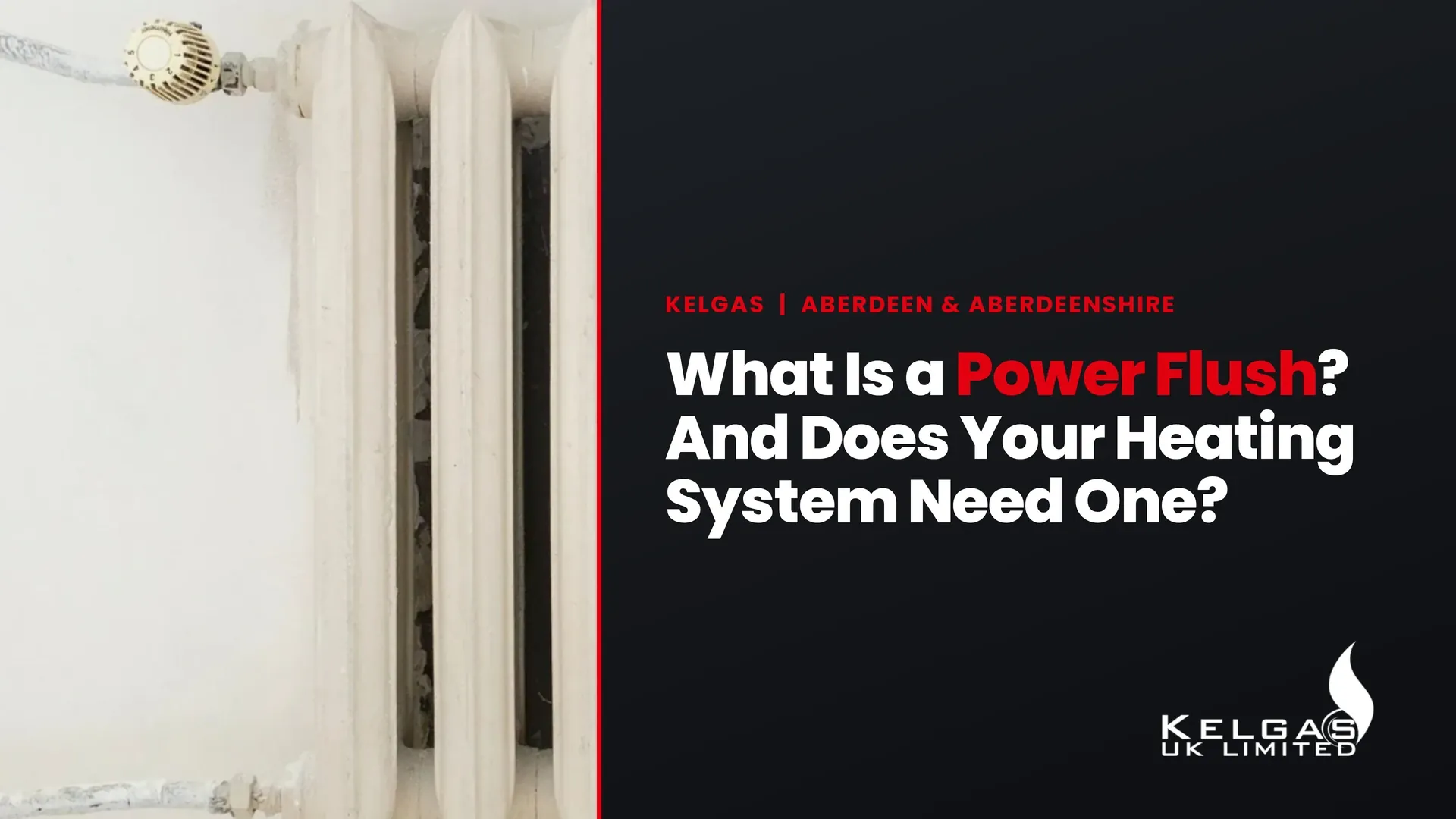
Bleed a radiator in a 20 year old Aberdeen home and the water that comes out is often black. That is magnetite, a sludge made of rust and debris. It is the most common reason radiators go cold at the bottom and boilers start making noises they never used to make. A power flush clears it out. Here is what the job actually involves, how to tell if your system needs one, and what it costs in Aberdeen.
A power flush is a deep clean of your central heating system. An engineer connects a pump to your system and adds a cleaning chemical. Water is then pushed through the pipes, radiators and boiler at a much higher flow rate than your own heating pump can manage.
That force lifts the sludge that has settled inside your radiators and pipework. The muck is then carried out of the system. The dirty water goes down the drain. Clean water goes back in, treated with a corrosion inhibitor so the problem takes far longer to come back.
The sludge itself is called magnetite. It forms when oxygen gets into the system water and slowly corrodes the steel inside your radiators. Over ten or fifteen years, that corrosion turns into a thick black sediment. It settles at the bottom of radiators, blocks narrow pipework, and clogs the heat exchanger inside the boiler.
A power flush is not the same as a chemical clean. A chemical clean means dosing the system, running the heating for a while, then draining it. That works on a lightly dirty system. A power flush uses a dedicated machine and takes several hours. It is what you need once sludge has properly built up.
Most homeowners have never seen a power flush and expect the house to be turned upside down. It is more straightforward than that.
Timing depends on the property. A combi or sealed system is quicker because there is no cold feed or expansion pipework to cap off. A three bedroom house with a vented system usually takes around five hours. Half a day is the honest answer for most Aberdeen homes.

You do not need to guess. Sludge gives itself away:
One sign on its own might be something else. A single cold radiator can be a stuck thermostatic valve, and a noisy boiler can be a pressure problem. Three or four signs together point firmly at sludge.

Plenty of national articles will tell you limescale is destroying your heating system. In Aberdeen that is mostly not true. Scottish Water classifies the supply from Invercannie, which serves Aberdeen and much of Deeside, as soft. Soft water means very little limescale in your pipework compared with the south of England.
So why do local systems still sludge up? Corrosion. Soft water is slightly more aggressive towards metal, and once oxygen finds its way into a system with no inhibitor in it, the steel radiators start rusting from the inside. That rust is your magnetite.
This matters for two reasons. First, if a company quotes you for a descale on an Aberdeen combi, ask what evidence they have of scale. Second, the real fix here is water treatment. A proper flush plus a good inhibitor plus a magnetic filter keeps a system clean for years. We see the same pattern in older granite properties across the city. It shows up too in the 1970s and 1980s housing around Westhill, Inverurie and Portlethen, where original radiators sit on pipework that has never been treated.
Nobody can quote a power flush accurately without knowing how many radiators you have and what type of system you are running. What we can give you is honest market context.
UK cost guides in 2026 put a typical three bedroom house with eight to ten radiators at £400 to £550. Flats and small homes with six or fewer radiators sit lower, around £300 to £400. Four and five bedroom properties climb towards £550 to £700. Aberdeen pricing sits close to the UK average. Local quotes generally land in the £380 to £700 bracket, depending on system size and how bad the build-up is.
Be wary of anything priced very low. A genuine flush takes an engineer most of a day, plus chemicals. A rock bottom quote usually means a quick chemical dose sold as a power flush.
For comparison, our standard boiler service is £69.30 +VAT, with a £60 +VAT loyalty rate for returning customers. A service is not a flush, but the service is where we spot the early signs and tell you honestly whether a flush is worth the money yet.
“A power flush will fix my old boiler.” It will not. If the heat exchanger is already damaged or the boiler is 15 years old and failing, a flush is money spent on the wrong thing. A good engineer will tell you that before taking the job.
“Every system needs one every few years.” No. A system that was cleaned and dosed properly, with a magnetic filter fitted, can go a very long time without another flush. Regular servicing includes checking the system water condition, which is exactly how you avoid needing repeat flushes.
“It is optional when a new boiler goes in.” This one costs people their warranty. BS 7593:2019 is the code of practice for treating water in domestic heating systems. It requires the system to be cleaned and dosed with inhibitor. Most manufacturers, including Ideal, Worcester Bosch, ATAG and Baxi, expect a magnetic filter fitted too. Skip it and a future warranty claim can be refused. We do this as standard on every boiler installation, and we are Gas Safe registered under 547324 so the paperwork stands up.
“I can do it myself with a hosepipe.” Draining and refilling is not a flush. Without the pump pressure and reverse flow, the heavy sludge stays exactly where it is. Refilling without inhibitor then makes the corrosion worse.
Usually around half a day. A three bedroom house with a vented system takes about five hours. Combi and sealed systems are quicker because there is no cold feed or expansion pipework to cap off.
On a healthy system, no. On a very old system with radiators already thin from corrosion, flushing can reveal a weak spot that was going to leak anyway. That is why the job starts with an assessment. You know the risk before anyone connects a machine.
If the radiators heat unevenly but the system is sound, flushing is far cheaper than replacing. If radiators are leaking and the pipework is original, putting the money towards a system upgrade often makes more sense. We give you the honest comparison rather than defaulting to the bigger job.
You need the system cleaned and treated, yes. Whether that means a full power flush or a chemical clean depends on the state of the existing system. BS 7593:2019 and most manufacturer warranties require a cleanse and inhibitor either way.
Three things. Keep the corrosion inhibitor topped up, fit a magnetic filter on the return pipe near the boiler, and book an annual service so the system water gets checked before sludge builds up again.
Black water when you bleed a radiator, cold patches at the bottom of panels and a noisy boiler are the classic signs of sludge, and in Aberdeen that sludge is corrosion rather than limescale. A power flush clears it, and the inhibitor and filter that follow are what keep it clear. If you are seeing two or three of the signs above, get the system looked at before winter rather than during it.
Call us on 01224 961610 or text 07897 012244. We will assess your system honestly, tell you whether a flush is the right spend, and quote a fixed price before any work starts. We cover Aberdeen and Aberdeenshire, from the city out to Stonehaven, Banchory, Ellon and Oldmeldrum.
Find all of our reviews on Google, Facebook and Trustpilot.